
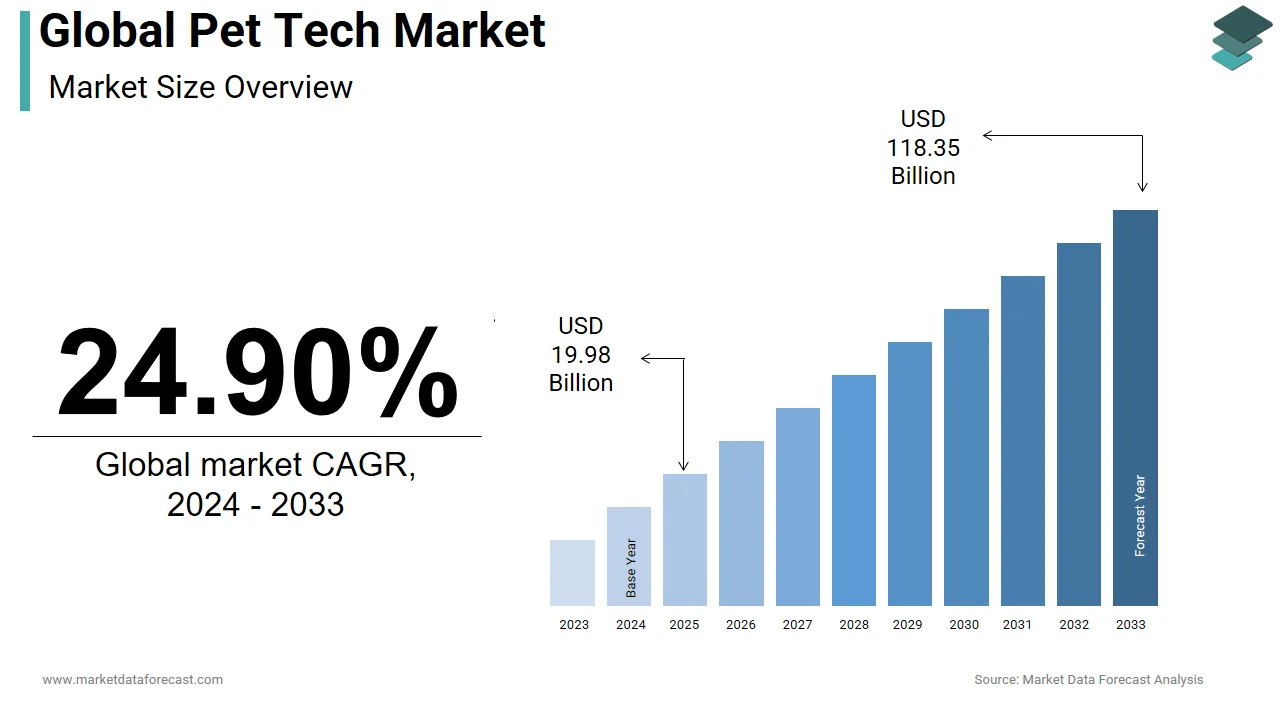
The global pet technology market was valued at approximately USD 16 billion in 2024. It is indeed projected to experience a remarkable growth rate of 24.90% CAGR from 2025 to 2033, reaching an estimated USD 118.35 billion by the end of this period, up from USD 19.98 billion in 2025.
Pet technology encompasses digital and connected solutions aimed at improving pet care, safety, health monitoring, and owner convenience.This includes devices such as wearables, GPS trackers, automated feeders, telehealth services for pets, and AI-driven behavioral training tools. The surge in this market can be attributed to increasing rates of pet adoption—especially among urban families—where pets are increasingly viewed as family members.
FACTORS FUELING MARKET GROWTH
The Humanization Trend in Pet Care
The growing trend of treating pets as family members significantly drives the expansion of the Pet Tech Market. Pet owners are now seeking products that reflect human health and wellness technologies tailored for their furry companions’ needs—including health tracking systems and emotional support tools. According to the European Pet Food Federation’s data from 2022, around 91 million households across europe owned at least one pet; spending patterns indicate a shift towards premium products that incorporate technology into care routines. Urbanization coupled with rising disposable incomes further fuels this trend as owners invest in smart collars and health trackers that fit seamlessly into their busy lifestyles.
The Rise of Veterinary Telehealth Services
The rapid adoption of veterinary telehealth has accelerated interest in connected technologies for effective pet care management within the expanding Pet Tech Market. The american Veterinary Medical Association reported over a twofold increase (200%) in telehealth consultations during the pandemic—a trend likely here to stay as more owners embrace digital veterinary services. Remote monitoring devices like smart cameras and GPS-enabled trackers empower both veterinarians and owners to monitor vital signs effectively while identifying potential issues early on; this is particularly relevant given rising chronic conditions among pets—with nearly two-thirds classified as overweight or obese according to findings from the Association for Pet Obesity Prevention.
BARRIERS TO MARKET GROWTH
High costs Associated with Advanced Technologies
The uptake of advanced technologies such as AI-driven wearables or robotic companions often faces hurdles due to high acquisition costs associated with these devices along with ongoing subscription fees for services provided through them—premium GPS collars can range between USD100-300 without including monthly service charges which poses meaningful barriers especially within lower-income regions where spending on non-essential goods remains limited (as noted by World Bank statistics indicating over forty percent spend less than five dollars daily). This affordability gap restricts access outside affluent urban areas despite increasing ownership rates globally.
Concerns Over Data Privacy & Connectivity Issues
A growing reliance on IoT platforms raises concerns regarding data privacy which could hinder growth prospects within this sector; many devices collect sensitive geolocation details alongside behavioral metrics linked directly back personal user data raising trust issues amongst consumers—as highlighted by nearly forty percent expressing distrust towards iot-enabled gadgets according International Telecommunication Union reports . Additionally inconsistent internet connectivity particularly prevalent rural settings further complicates real-time usage capabilities impacting overall effectiveness when utilizing tracking applications or remote consultations.
POTENTIAL FOR MARKET EXPANSION
The role Of AI And Predictive Analytics In Enhancing Pet Health Management
Simplifying Integration With Smart Home Systems
This rise interest surrounding smart home ecosystems creates avenues facilitating seamless integration between existing household automation systems alongside innovative new offerings designed specifically cater needs modern-day pet ownership trends ; projections suggest number connected homes will surpass five hundred million worldwide by twenty twenty-six allowing greater interoperability amongst various gadgets including feeders , surveillance cameras ,and fitness monitors providing real-time updates via voice assistants enhancing user experience significantly compared standalone options available today.Owners gain ability remotely track food intake hydration levels activity patterns receive alerts through centralized hubs making it easier manage multiple aspects caring fur babies efficiently without hassle involved traditional methods employed previously.
MARKET CHALLENGES AHEAD
Lack Of standardized Protocols Across Devices Hinders Adoption Rates < / STRONG >
The absence standardized protocols across different platforms presents challenges impeding long-term viability growth potential seen throughout industry ; many current offerings operate proprietary software limiting compatibility sharing critical information necessary ensure optimal performance when integrating veterinary records other related applications used regularly consumers face fragmented experiences leading frustration ultimately discouraging investment multiple solutions available marketplace today according IEEE Standards Association findings indicating sixty percent consumer IoT device struggle interoperability issues encountered frequently resulting complications monitoring processes efficiency levels drop considerably impacting overall satisfaction derived using these products effectively.< / P >
Limited Awareness And Education Amongst Consumers < / STRONG >
Despite increased adoption rates observed developed nations , numerous individuals remain unaware benefits offered through emerging technologies designed improve lives their furry friends ; World Veterinary Association indicates fifty-five percent respondents residing developing economies rely solely traditional methods lacking exposure modern alternatives available currently hindering progress made thus far towards achieving widespread acceptance desired outcomes sought after industry stakeholders alike moving forward into future landscape filled possibilities awaiting exploration ahead ! Furthermore veterinarians themselves may lack familiarity advanced monitoring equipment restricting implementation efforts needed maximize effectiveness achieved utilizing cutting-edge innovations introduced recently.< / P >
REPORT OVERVIEW AND METHODOLOGY< / STRONG >
REPORT METRIC< /SPAN > | DETAILS< /SPAN > |
|
MArket Size In The Market< / STRONg > |
2024 To20333 < / P > / TD / TR / TR |